Package Managers in Linux: APT vs YUM vs Pacman vs Zypper

Package Managers in Linux: APT vs YUM vs Pacman vs Zypper

Linux package managers are the silent heroes of system maintenance—but which one reigns supreme? This guide breaks down:

✓ APT (Debian/Ubuntu) – Simple but powerful
✓ YUM/DNF (Fedora/RHEL) – Enterprise-grade reliability
✓ Pacman (Arch) – Blazing-fast and minimalist
✓ Zypper (openSUSE) – Advanced dependency resolution

Learn key commands, speed benchmarks, and which distro’s package manager best fits your workflow. Whether you’re fixing dependencies or optimizing updates, this is your cheat sheet for Linux software management.

Linux File System Esplained: From ext4 to Btrfs

Linux File System Esplained: From ext4 to Btrfs

Your Linux filesystem choice impacts everything from SSD lifespan to data recovery chances. This deep dive compares:

✓ ext4: The mature default (but stuck in 2008)
✓ Btrfs: Built-in snapshots & compression
✓ ZFS: Enterprise-grade integrity (RAM hungry)
✓ XFS: Best for large files

Includes benchmarks, corruption recovery tips, and when to reformat. Essential reading before installing Linux or building a NAS.

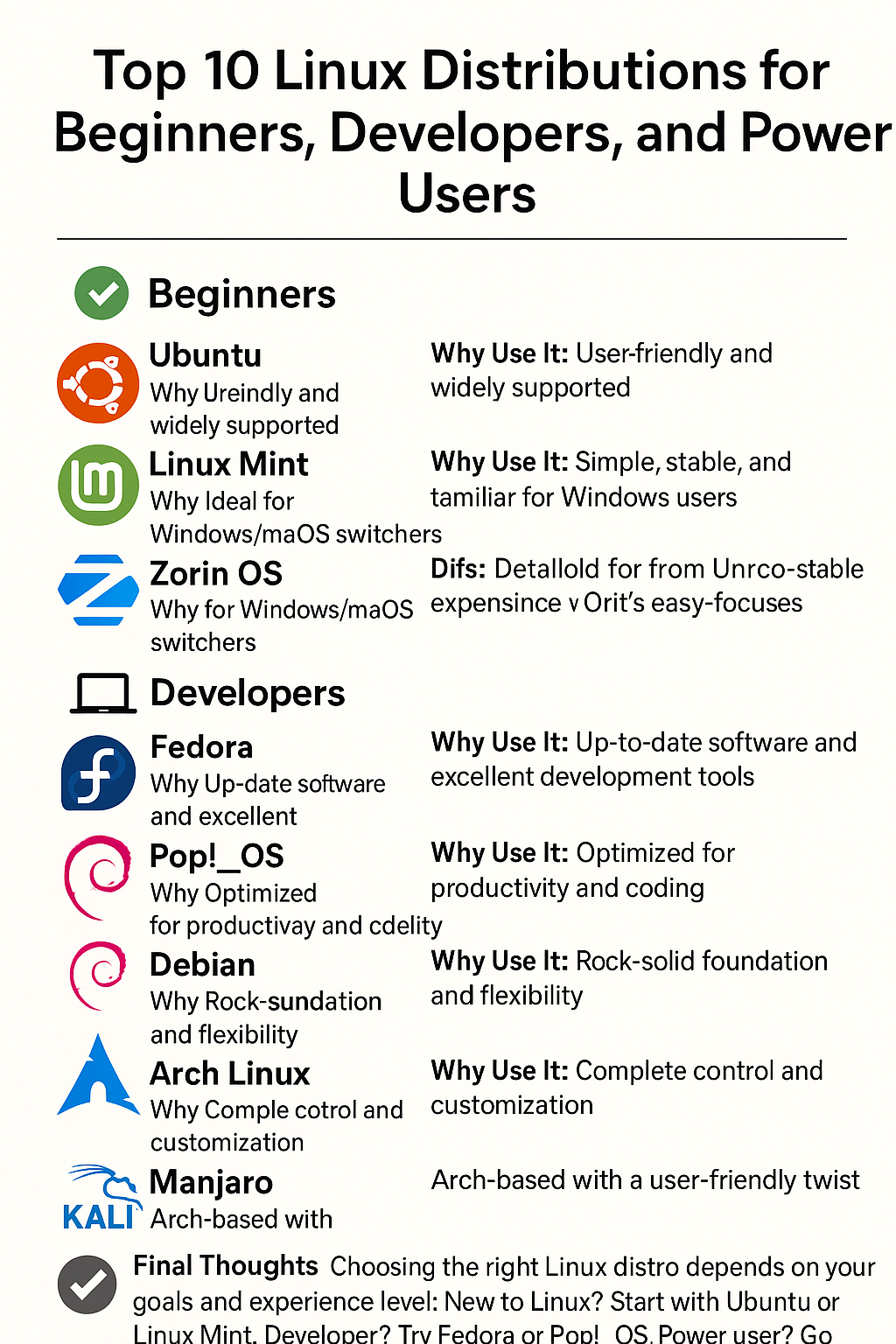
Top 10 Linux Distributions for Beginners, Developers, and Power Users

Top 10 Linux Distributions for Beginners, Developers, and Power Users

Decentralized Autonomous Organizations (DAOs) are revolutionizing how groups collaborate – but are they right for you? This guide breaks down:

✓ How DAOs replace traditional hierarchy with smart contracts
✓ Real-world examples from DeFi to NFT projects
✓ Critical risks like code exploits and governance attacks
✓ Step-by-step: Joining your first DAO safely

Whether you’re a crypto enthusiast or just Web3-curious, understand the promise and perils of this blockchain experiment before getting involved.

What is Linux? A Beginner’s Guide to the Open Source Operating System

What is Linux? A Beginner’s Guide to the Open Source Operating System

From powering 90% of the world’s supercomputers to running silently inside your Android phone, Linux is the invisible force driving modern technology. This free, open-source operating system has evolved from a student’s side project into the backbone of global computing—yet most users have never directly interacted with it.

Discover why developers swear by its flexibility, why enterprises rely on its security, and how beginners can dive in through user-friendly distributions. Whether you’re curious about the command line’s raw power or want to understand why Linux dominates cloud computing, this guide unveils what makes this community-driven OS fundamentally different from Windows and macOS—and why it might be your next operating system.

(Perfect for hooking both tech enthusiasts and curious newcomers by highlighting Linux’s paradox: ubiquitous yet unseen, powerful yet accessible.)